Driveways
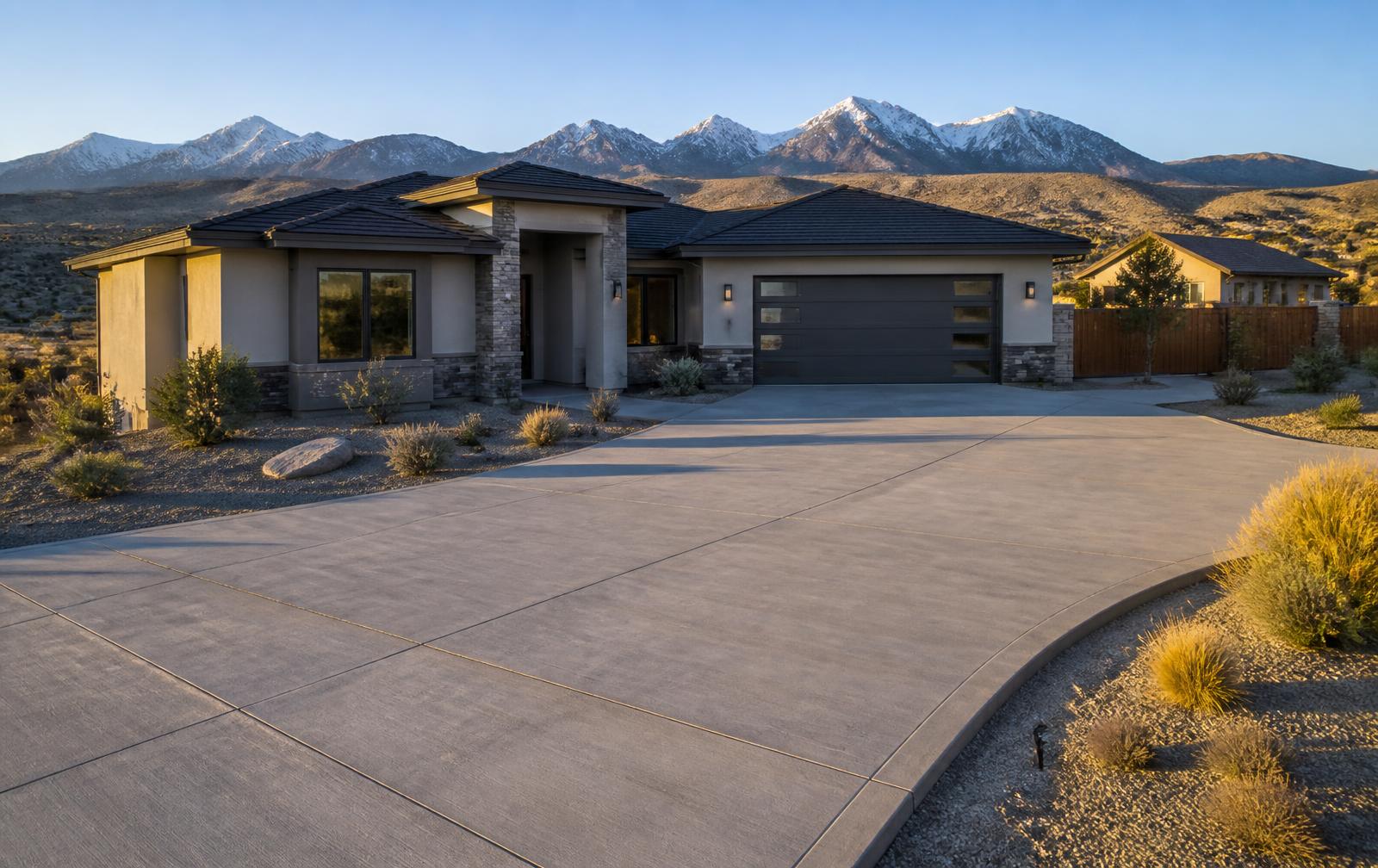
Concrete Driveways in Reno, NV
New driveway pours, widenings, RV pads and full tear-out replacements built for Northern Nevada freeze-thaw, sun and truck traffic.
- Typical thickness
- 4" residential, 5–6" for RV and truck traffic
- Reinforcement
- Rebar grid or fiber, depending on loads and subgrade
- Common finishes
- Broom, smooth-troweled edges, exposed aggregate, stamped borders
- Use in
- New builds, widenings, replacements, second parking pads
A driveway is the largest single piece of concrete on most Reno properties and the one that takes the worst abuse: delivery trucks, snow plows, road salt tracked in from the street, and a freeze-thaw cycle that runs most nights from November into April. Getting one to last 30 years is less about the concrete truck and more about what happens before it arrives — subgrade compaction, thickness, reinforcement and where the joints land.
This page covers how driveways get built here, when a slab is worth saving versus replacing, and what actually moves the number on an estimate. If you are budgeting, start with driveway pricing factors. If the existing slab is failing, compare concrete repair options against a full driveway replacement. Still deciding on material? The concrete vs asphalt comparison for Reno walks through lifespan, heat and maintenance differences.
What goes into a driveway that lasts in Northern Nevada
Most driveway failures around the Truckee Meadows trace back to three things: a soft or uneven subgrade, joints cut too late or spaced too far apart, and a slab that was finished while the surface was drying faster than the concrete below it.
The build sequence we follow
- 1Strip and shape the subgrade. Organics and loose fill come out, and the base gets shaped to drain away from the garage and the house.
- 2Base course and compaction. Class II road base placed in lifts and compacted, which matters most on the cut-and-fill lots common in the South Reno and Spanish Springs hills.
- 3Forms and grade check. Slope is typically set around 1–2% so water leaves the slab instead of pooling at the apron.
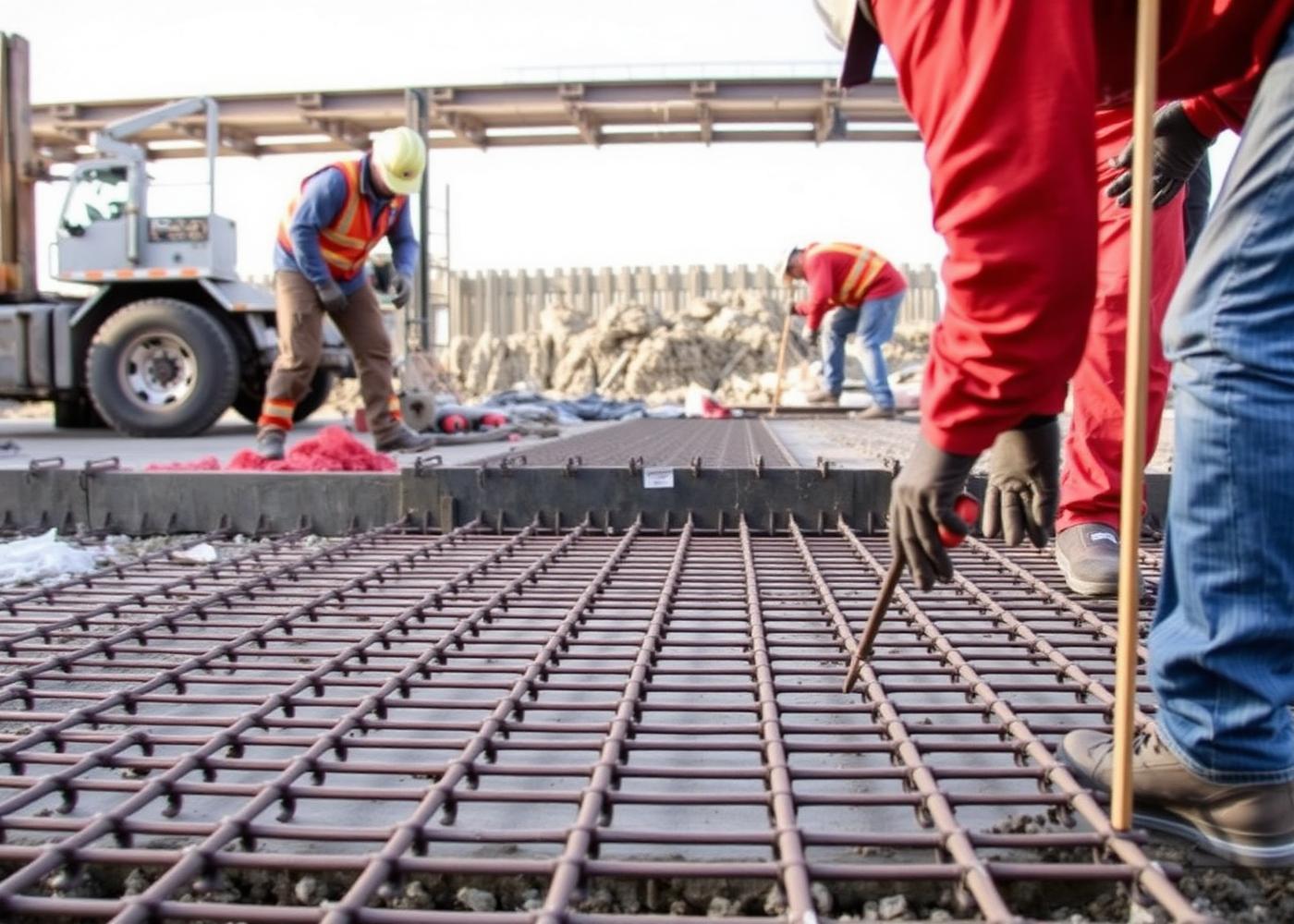
- 4Reinforcement. Rebar on chairs in a grid for vehicle loads, or fiber-reinforced mix on lighter residential pours. See concrete slabs for how the same principles apply to other flatwork.
- 5Place, screed, float, finish. A broom finish gives traction on winter mornings; edges and control joints are cut early so shrinkage cracks land where they are supposed to.
- 6Cure protection. Curing compound or wet cure. In a dry Reno summer this step is not optional — surface strength is won or lost here.
Thickness and reinforcement guide
| Use | Typical slab | Reinforcement | Notes |
|---|---|---|---|
| Standard car and SUV driveway | 4 inches | Fiber or #3 grid | Fine for daily household traffic |
| Frequent trucks, trailers, RV pad | 5–6 inches | #4 rebar grid | Also used at aprons and turnarounds |
| Sloped or poor subgrade lots | 5 inches | #4 rebar grid | Thicker base course under the slab |
| Commercial drive aisles | 6 inches+ | Engineered | Covered under commercial concrete |
New driveway, widening, or replacement?
A new pour or widening makes sense when
- You are adding a parking pad, RV slab, side pour or turnaround to an existing driveway.
- The current drive is gravel and you want a hard, dust-free surface.
- A new build needs the drive, entry walkway and garage floor placed together.
Repair is usually the right call when
- Cracks are hairline to about a quarter inch and the slab sections are still level with each other.
- Damage is limited to one panel or the apron rather than the full drive.
- Surface scaling is shallow and resurfacing can restore the wear layer.
Replacement is usually the right call when
- Panels have settled or heaved and now trip vehicles or hold water.
- Cracking is map-like across the whole surface, which points to subgrade rather than surface problems.
- The slab is under-thick for the vehicles now parking on it.
If you are on the fence, the repair versus replacement guide lays out the decision points, and crack repair explains what can and cannot be stitched back together.
Finish and design options
- Broom finish — the default for Reno driveways. Best traction on frost and ice, hides wear, lowest cost.
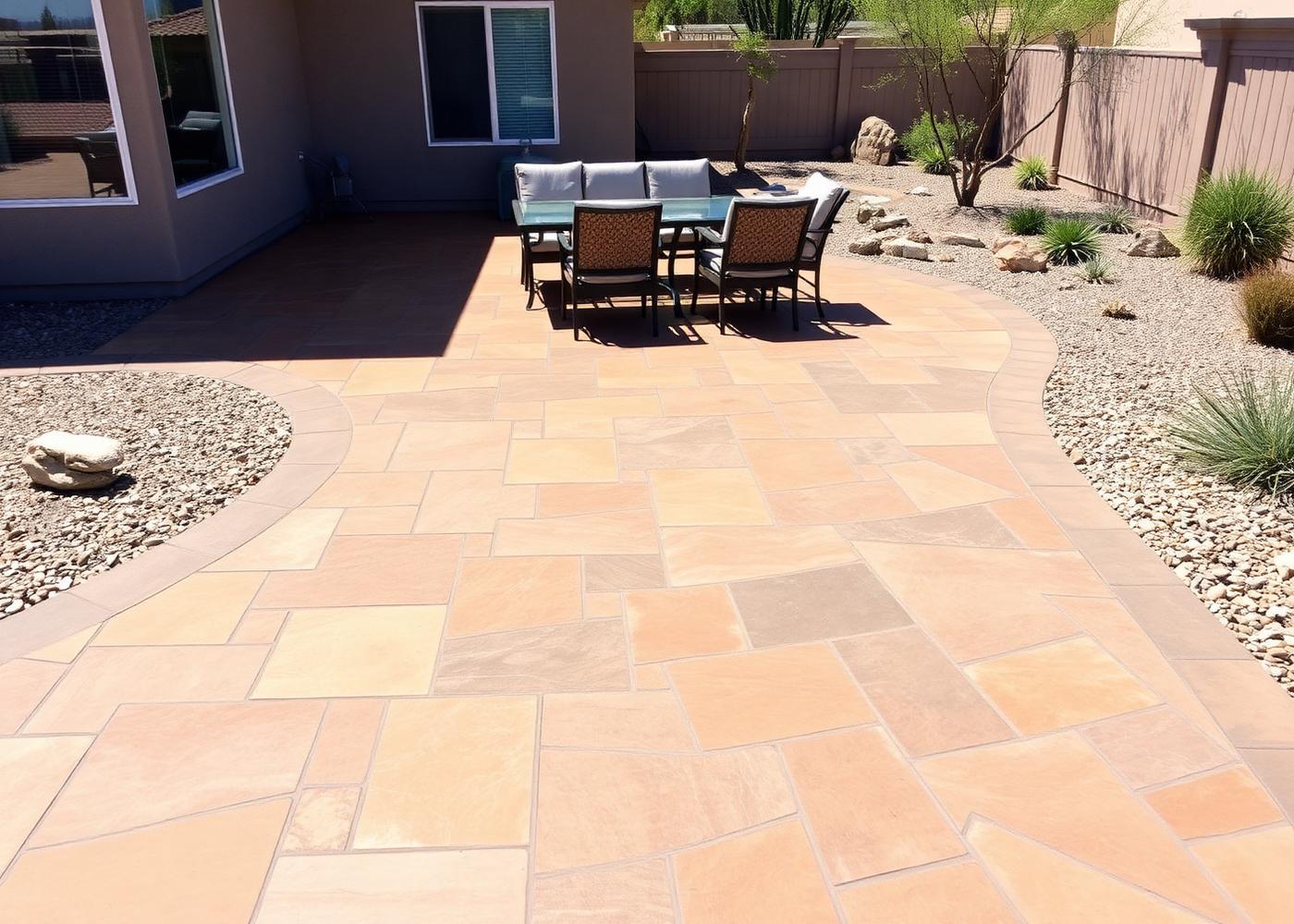
- Stamped or textured borders — a banded edge in a stamped pattern around a broom field gives a custom look without stamping the whole drive.
- Exposed aggregate — durable, good grip, hides staining. Covered further under decorative concrete.
- Saw-cut patterns — scored squares or diamonds that double as control joints.
- Integral color — earth tones that suit high-desert landscaping better than a bright gray slab.
More detail on texture, color and sealer choices is on the concrete finishes page.
What affects the price of a driveway in Reno
No two driveways price the same. These are the variables that move an estimate the most:
- Square footage and shape. Curves, islands and odd geometry add form work and labor.
- Thickness and reinforcement. A 6-inch rebar-reinforced RV pad uses far more material than a 4-inch car drive.
- Demolition and haul-off. Removing an existing slab adds machine time and dump fees; see replacement cost factors.
- Excavation and grading. Cut-and-fill lots and rock in the subgrade are common on the west and south edges of the valley.
- Drainage work. Trench drains, swales or an apron rebuild where the drive meets the street.
- Finish. Broom is the baseline; stamping, coloring and exposed aggregate add labor and materials.
- Access. Tight side yards, steep approaches or pump trucks all add cost.
Full breakdown on the driveway cost page and the general concrete cost guide. Real numbers require a site visit — anyone quoting a Reno driveway sight unseen is guessing.
Keeping a new driveway in good shape
- Stay off it with vehicles for the first week or so; foot traffic is usually fine much sooner.
- Reseal on a regular cycle. Sealer is what keeps de-icer and melt water out of the surface pores.
- Skip rock salt and ammonium-based de-icers, especially in the first winter. Sand gives traction without chemical attack.
- Keep sprinklers off the slab. Repeated wetting plus freezing is what starts scaling along edges.
- Fill open joints and cracks before winter so water does not get under the slab.
The driveway maintenance guide covers sealing intervals and winter care in detail, and how long concrete lasts explains what a realistic service life looks like here.
Questions we get asked
Concrete Driveways in Reno, NV: common questions
How thick should a concrete driveway be in Reno?
Four inches over a compacted base handles ordinary cars and SUVs. Step up to five or six inches with a rebar grid if you park trucks, trailers or an RV, or if the subgrade is soft or filled.
How long before I can drive on a new concrete driveway?
Concrete gains most of its strength over the first month. Light vehicle traffic is generally kept off for about seven days, and heavy trucks or RVs longer. Your crew will give you a date based on the mix and the weather at the time of the pour.
Can concrete be poured in winter in Northern Nevada?
Yes, with planning. Cold-weather placement uses adjusted mixes, warmer water, blankets and longer cure protection. Placement is avoided when the subgrade is frozen or when temperatures will not stay above freezing long enough for a safe cure.
Why did my driveway crack even though it is new?
Concrete shrinks as it cures, so some cracking is normal. Control joints are cut to direct that movement. Cracks that follow joints are expected; wide, offset or spreading cracks point to subgrade or reinforcement issues and should be looked at.
Do you widen existing driveways?
Yes. A widening or added parking pad is tied into the existing slab with a joint rather than bonded solid, so the two sections can move independently. Color and finish are matched as closely as new concrete allows, though a slight shade difference is normal.
Related concrete services & guides
Where we do this work
Crews work throughout the Reno–Sparks area. Pick your community for local notes on soils, permitting and typical projects.
Free project estimates
Talk through your concrete project with someone who pours it
Describe the area, the condition of any existing concrete and how you want to use the space. You'll get straight answers on scope, sequencing and what drives the price.
Next step
Get a site-specific estimate
Concrete pricing depends on access, subgrade, thickness, reinforcement and finish, so real numbers come from looking at the site. Send the details or call (775) 324-5551.
- Walk-through of the area and existing concrete condition
- Scope, thickness, reinforcement and finish options in writing
- Clear explanation of what would change the price
- No pressure to decide on the spot