Commercial
Commercial Concrete in Reno, NV
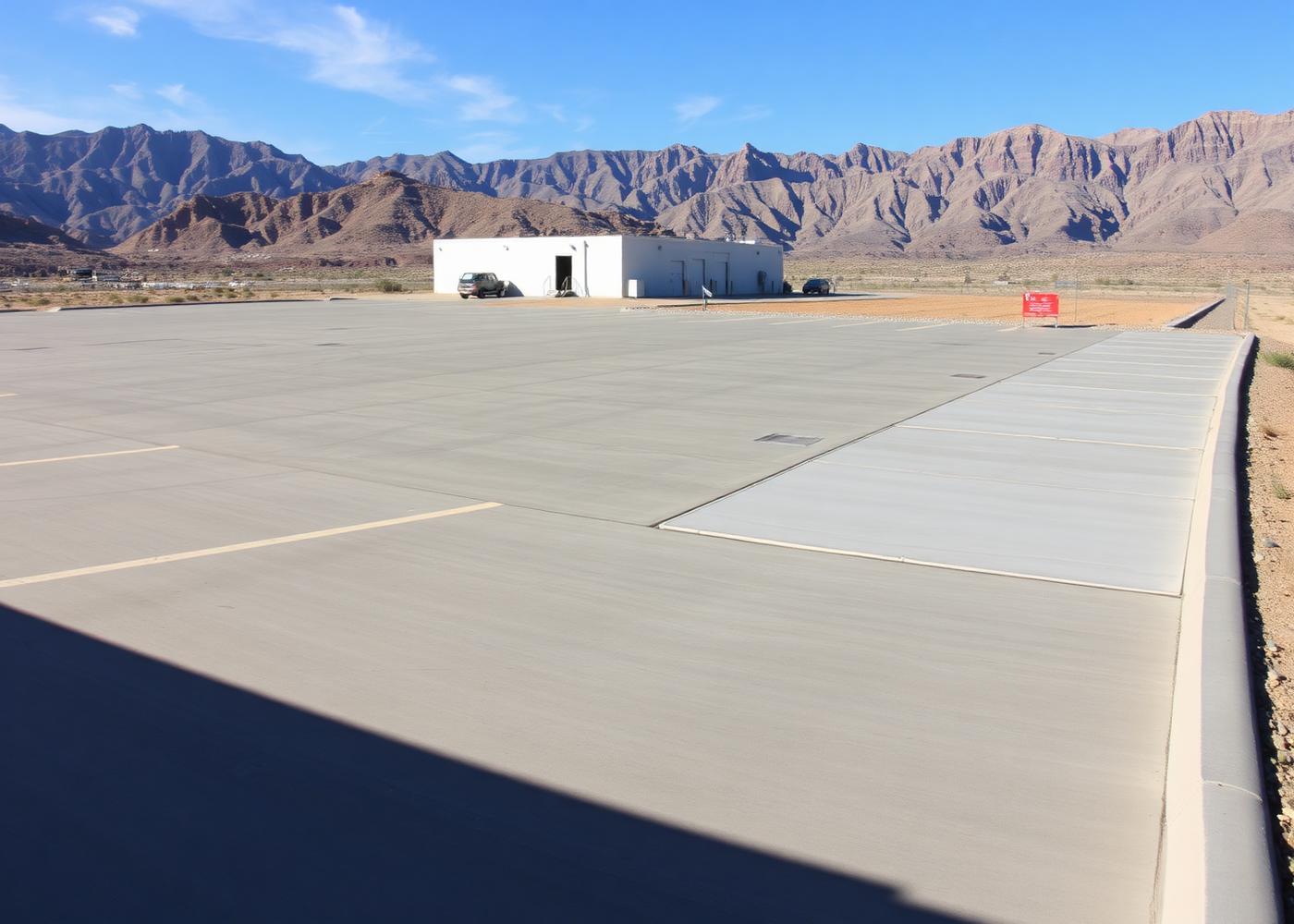
Concrete for businesses, property managers and general contractors — heavy-load slabs, site flatwork and access work sequenced around your operations.
- Scope
- Parking lots, aprons, dumpster pads, sidewalks, curb, ADA access
- Slab design
- Thickness and reinforcement set by traffic loads
- Scheduling
- Phased or off-hours work to keep sites usable
- Clients
- Property managers, GCs, retail, industrial, HOAs
Commercial concrete is judged on two things beyond the finished slab: whether the design carries the loads it will actually see, and whether the work can be sequenced so the business keeps operating. A dumpster pad taking a loaded truck's front axle is a different slab than the parking stall next to it, and pouring both the same thickness is how sites end up with a cracked pad in year two.
Related work: concrete slabs for the technical side of slab design, parking lot work, footings for structures and light poles, and repair for existing site concrete.
Commercial scope of work
Site flatwork
- Parking lots and drive aisles, sized to traffic type
- Loading aprons and dock approaches
- Dumpster and equipment pads
- Sidewalks, curb, gutter and wheel stops
Access and compliance
ADA-compliant ramps, landings and detectable surfaces, with slopes verified rather than eyeballed. Access routes are one of the most common items flagged on a property review.
Structural
Building slabs, thickened edges, footings and pads for equipment, generators and light poles.
Phasing
Most commercial jobs are staged half-lot or section by section so customers and deliveries keep moving. Cure times drive the schedule, and high-early mixes can shorten the closure window when the budget justifies it.
Why commercial slabs fail early
- Thickness set by habit instead of load. Trucks on a 4-inch slab crack it, every time.
- Joint layout ignored. Panels too large, joints cut too late, or joints that do not line up with columns and edges.
- Base not compacted. Especially over utility trench backfill, where settlement telegraphs straight through the slab.
- No drainage plan. Ponding water plus freeze-thaw plus de-icing salt takes surfaces apart fast in Northern Nevada.
The same failure modes and their fixes are covered in repair versus replacement.
Questions we get asked
Commercial Concrete in Reno, NV: common questions
Can you work around business hours?
Yes. Most commercial jobs are phased by section, and off-hours or weekend pours are common where a closure would be disruptive. Cure time still governs when an area can reopen.
How thick should a commercial parking area be?
Passenger-vehicle stalls are typically thinner than drive aisles, and truck routes, dumpster pads and dock aprons are thicker still with heavier reinforcement. The design follows the actual traffic, which is why load information matters at the estimate stage.
Do you work with general contractors on new construction?
Yes — slabs, footings and site flatwork sequenced within a larger construction schedule.
Where we do this work
Crews work throughout the Reno–Sparks area. Pick your community for local notes on soils, permitting and typical projects.
Free project estimates
Talk through your concrete project with someone who pours it
Describe the area, the condition of any existing concrete and how you want to use the space. You'll get straight answers on scope, sequencing and what drives the price.
Next step
Get a site-specific estimate
Concrete pricing depends on access, subgrade, thickness, reinforcement and finish, so real numbers come from looking at the site. Send the details or call (775) 324-5551.
- Walk-through of the area and existing concrete condition
- Scope, thickness, reinforcement and finish options in writing
- Clear explanation of what would change the price
- No pressure to decide on the spot